Thursday, November 19, 2020

Bring back the Art of Improv, yo!

Years ago, when I started teaching middle school, I witnessed my first kindergarten dance presentation. I must confess I was impressed. The presentation was clearly rehearsed—arguably to an obsessive degree. 

Years later during my first years of mentorship training with Originateve, I started to learn more about the art of improvisation and the dire need to regenerate, back into our educational models, this forgotten approach to the arts. This is the primary reason for which our preschool OPEN MIC curriculum exists. Our goal is for all of our kids to always be ready to perform, not simply after tiresome and stressful rehearsal. 

As you will see in the videos below, this morning we created a little space for IMPROV. Here are a few contextualizing details that will help delineate the powerful experience we shared together. 

  • Nobody knew about our improvised dance session this morning—not even me! Our Diguan teachers (kids ages 4-6) knew that we would have a DO SI DO dance time, but none of us had planned for it to be a public performance.  
  • If you look carefully at the first video, you can see what I hoped for most clearly in Momo’s face (the first girl in the line-up) as she entered the room, hand-in-hand, with her partner. There was a blush but also a solid determination. This is an essential life quality we hope to foster in all of our children. Momo for her first 2 years at MT, was the queen of saying No! Always too shy! Well, sorry, not anymore. Our kindergarten team has chiseled away at all silly sheeping away nonsense. 
  • Due to the success of our first round of DO SI DO, I then decided to take the improvisational risk a bit further. Time for the little brothers and sisters to dance. I had no idea how they would respond. Let me say that again: I HAD NO IDEA HOW THEY WOULD RESPOND. This aspect is key to any serious educational model. Overly paid curriculum developers in far away sky scrapers are way too hung up on eliminating any unpredictabilities. Like mad lab scientists that want full control of outcome. Theories cease to be theories when they’ve already been test-proofed to death. Nothing new can ever come, if we are always trying the same approach. Today we ventured and took a risk and our kids surprised us with their brilliance and natural inclination towards improvisation and live performance. 
  • And what about all of the peer to peer learning that is taking place. Kids are helping kids know what the hell is going on. Now, that is what the experts call child-centered learning! 
  • One final point I want to make is regarding the importance of learning to be a good audience. Too often we focus on the performers rather than on the audience. Great performers are all great audiences first. They understand the respect that performance merits. 
In closing, our kids did today what adult parents and teachers often shy away from. As always, we would do well to learn from the littlest in our midst.


CBE

MT Teaching Director


Wednesday, October 14, 2020

A Scary Way to Help our kids Overcome Fears and Anxieties


MasterTree Kindergarten approaches safety by easing children into a relationship with elements of danger. Research demonstrates that sheltering children from danger does not in actuality create lasting protection for children but instead increases the likelihood of being hurt. Children safely introduced to danger are better able to recognize potential hazards and avoid the possibility of peril.  A child who has spent little time in the woods is more prone to getting hurt than a child who has developed a relationship with the different elements of nature in a forest. Each environment is not the same for any two individuals. Children shielded from exploring and taking risks are more naive.  The unknown poses a far greater threat and requires heavier assistance to navigate potential threats. 

This educational philosophy is best understood through our world class curriculum, but is, likewise, speckled all through our daily activities: Zao Jun Cooking, Old Mac Donald's workshop, our rooftop garden and animal area etc…

Similar to this model is our approach to building up strong emotional intelligence within our children by allowing moments of encounters with fears. Our 4 annual gatherings around the fire, our 2 annual sleepover parties, and especially our Halloween curriculum are essential aspects of our holistic curriculum that seek to allow create real opportunities for our children to encounter their fears in close proximity to caretakers that can guide them into a healthy relationship with that which frightens us. 

As children grow, many parents notice that their once-fearless preschooler is suddenly scared of the dark, frightened by thunderstorms, or convinced there are monsters hiding under the bed. Each child has a different time-clock for when fear becomes a recognizable and addressable response to a given situation. These emergences are signs of growth of awareness and abstract thinking. For this reason, we may be surprised to often see some of our youngest children at play with the scariest monsters of our Halloween curriculum. It's natural for children to develop childhood fears-it's part of their normal growth and development. As kids try to comprehend the world around them, they are not entirely sure of what's fantasy and what's reality, so their imagination can create incredible things, like monsters. Some of the most common fears experienced by young children are the dark, thunderstorms, monsters, animals and loud noises. Embracing those fears intentionally within a safe community can provide the necessary environment to generate life long skills in autonomous emotional management.


3 WAYS TO GUIDE OUR KIDS TOWARDS INNER STRENGTH


1. BE THERE FOR THEM

AT SCHOOL     - Children often encounter these scary experiences on their own. Bringing Halloween close to our children, allows for children to feel our support and comfort in the moment of fear. Their fears are not dismissed rather embraced. We observe their individual responses and guide them towards their next step of inner strength.

AT HOME     - You can also help your children at home by bringing them closer to possible fears. Some children may not yet sleep in their own bedroom, some may not yet sleep with the light off. Don't be afraid to allow them to grow into deeper stages of relationships with being alone or in the dark. 


2. FIND MOMENTS TO TALK

AT SCHOOL - An essential component of our Halloween curriculum is the time allotted during special circle for kids to share their fears and acknowledge that fear as something that is valid.   Find your calm and reassuring voice and then watch them learn to find their own, internal, calm and reassuring voice. 

AT HOME - Finding moments of dialogue at home is also essential to a proper processing and emotional maturation within our children. Encourage your child to talk about his or her fears so he or she can learn to gain control over the fear. Show your child ways to cope with fears, such as taking deep breaths or keeping a flashlight by the bed.


3. MODEL THE CHILD YOU WANT YOUR KID TO BE!

AT SCHOOL - Children often pick up on fear from the adults they are around. By interacting with Halloween at school, our children are able to see the fearlessness in the adults and even some of their peers. This helps them know how to respond to feelings of fear. 

AT HOME - Parents can also help with this process by encountering the various halloween characters upon arrival at school. It is important for parents to model a calm approach to confronting fears in achievable steps, rather than allowing children to avoid all of life's moments that contain anxiety.

Monday, September 14, 2020

Letter to Staff on Holy Disruption

September 11, 2020

Shishi, Fujian - PRC


Dear Team, 


Today's lunch was disruptive and at this kindergarten, now (and I hope always) that is absolutely welcome! I am a fan of disruption. Many take disruption too far and advocate for anarchy, others conform too much. Both extremes are futile. The secret is finding the Yin-yang in it all. Adequate and responsible disorder is an art that few understand, and far less can do well. 

The longer you have been at MT, the more you have witnessed this type of holy misconduct. Penny and Carmen are the most fortunate of all. They have witnessed every single moment of insanity. A few of my favorite memories of madness are: 

1. MT Water Wars

2. Parents jump fires with little babies in their arms

3. Burying bones in sandpits for epiphanic learning

4. Classroom Forts

5. Secretly carrying out a curriculum of world class (though legally we should only have one outing a month)

...and many more. 

Back to our lunch today. This is week 2. Lunch feels stagnant. Mechanical. ...and in the simplest of terms: BORING. I severely dislike the corona virus protocols that no longer allow us to execute our Zao Jun curriculum we so beautifully created together over the last 3 years. And so, that is what happened. I needed some ROCK AND ROLL. 

To all who felt bothered: I look forward to your equal or better disruption of lunch with some artful disruption of your own. Consider this a competition. Who can turn our boring lunches into the most fun? And please, don't use your ordinary duty as an excuse! If you take the role of being on stage, and then running around chasing the kids with Vick, and then rallying all but 7 of our children to head down to an early nap, I will gladly take your place with our slow-eaters. We are a team, we need to know how to wear different hats. I can feed, wipe butts, dance like an idiot, tell a story and write a goddam manifesto in favor of holy disruption. And I love it all! 

To all those who joined in the singing of QUEEN's: WE WILL ROCK YOU. Thank you. 

I did make one mistake: I forgot to put the climbing toy back in its place behind the stage. 

I have one last confession to make: Learning the skill of being a menace has not been easy. It requires a sound dose of luck, primarily in the form of great Mentors of Disruption. The list of blessed-wretched-havoc-makers I have learned from is not necessarily long, but each and everyone lives through me in moments like today's lunch. Among the best of them is: Dr. Seuss, renown author of books for children (ages 1 to 89.3).

Long before writing children's stories, Dr. Seuss was already stirring trouble in the world of global politics with his anti-war comics. He was loathed by many, and loved by others. (See picture below). He eventually gave up on trying to change the hearts of big children (aka adults). He became convinced that the only true possibility of revolution was to be found in the hearts of children. I have a similar story to tell on how I gave up on trying to change big people and decided to work with preschoolers but that's a story for another time: I've already been too longwinded and should probably get to some sort of point:

Consider THE CAT IN THE HAT. Think carefully about the storyline. What can we learn from this book which our MT kids probably know better than we do? Is the Cat a character we should avoid? Is his disruption a setback? Who are you in the story? 

a) The bored child that finds nothing to do on a rainy day? 

b) Or are you the Cat causing messes? 

c) Perhaps you feel more like Thing 1 or Thing 2?

3) Or are you the foot of the mother coming home instilling fear in all those who just want to play—even if it's raining outside?

I know who I am, and how I try to live. And I want nothing more from anyone who wants to responsibly consider the art of teaching. This is not Beiling or Montesorri. This is MT! 


With deep love, 


Carl Emmons (MA)

MT Teaching Director


Monday, March 23, 2020

COVID-19 = More Quality Time

Most mornings, I am the first up in my home. My early mornings are always sacred. They are a guarantee of time for introspection, through reading, writing, prayer, composition and at times catching up with friends on the other side of the world. During the regular school year, right about the time when everyone is waking up, I am getting my work clothes on, looking for my motorcycle keys and sneaking one last sip of coffee before zooming into Shishi for a day away from the family. Thanks to COVID-19, my late mornings now consist of cooking with my boys! Pancakes with blueberries, strawberries, bananas, marshmallows, sprinkles, maple syrup and melted butter are somehow a favorite we now have time to enjoy making and munching on together!

After that, it's time to start thinking about lunch. I have always enjoyed cooking, but time has always made it tricky to really enjoy trying out new recipes in the kitchen. During the regular school year, cooking with the boys usually only happens on the weekend. Thanks to COVID-19, we are trying out new recipes daily! Our diet is healthier and tastier as we have been able to add new recipes to our bag of tricks.

Eating lunch together! Not only has our diet improved throughout these COVID-19 times, but also the time we take to sit down and eat together. Gosh, I am going to miss lunch with the family when we get back to school. What a blessing to sit down, each day, hold hands, say thanks and enjoy some laughs while eat together!

After cleaning up, it is time to sit back and read! Having more time to read is another blessing brought about by the COVID-19. Our older son, Owen Jazz, has become a fully independent reader. Since the virus outbreak he has moved through 5 out of 7 books from the Harry Potter series. Though I miss cuddling with him, we are proud of his growth. Thank goodness, his little brother still likes Daddy reading to him. Nothing like hanging a hammock and cuddling in for an after lunch read.

Then, it is time for Dad to get back to some Dad stuff. Thanks to COVID-19, I have been able to reconnect with music. Writing and recording songs is something I have always loved, but in the busyness of the school year, I struggle to find time for. (See video embedded below for a new project born over the Covidays alongside fellow teacher: Javier Lastres.)

In the evenings, we all come together again for a board game, night walk, a movie, a tarot reading or some songs and stories. Again, none of this would be possible without the COVID-19 outbreak. And so, though I know for many families, elsewhere, this has been a very difficult time of sickness and even death, we have been blessed by a local government that has kept our village clear of the virus, granting us plenty of quality family time.

How has the COVID changed your family's rhythms and routines?

Almas Gemelas by D-ende
From The Descent EP
2020

Sunday, February 9, 2020

There is a yin in every yang but can you see it?

A new cycle down through the eternal spiral of the Zodiac Calendar has begun. However, the beginning of this Year of the Rat has failed to remind us of that first celebratory moment when Rat, “a long, long time ago”, leaped off Ox's back and took first place in the Great Race. Somehow, we are all feeling more like the Cat that, though once being a Rat's best friend, was pushed off the back of the Ox and into the heavy current life's river. 

The threat of the Corona Virus has certainly shifted everyone's plans of travel and play. Nonetheless, as a father, I reflect back on the last 3 weeks of holidays and allow myself to see the Yin in the Yang. I can't remember the last time we spent so much quality family time together at home. We have started and finished books we are reading as a family. We have pulled out board game favorites that we haven't used in a long time, as well as learning to play a couple of new ones. We have enjoyed nights of story around a fire and also, cuddled up in a new room in our home we designed just for song and story. Oh and the cooking! I can't forget the cooking. So many new dishes! Gosh, I wish there was more time during the year to slow down and enjoy cooking more meals for the family. 

Our kids, are aware of the virus, but their innocence and playful spirits have not been affected by it. This is our duty as parents and teachers. Through difficult times, keep an even keel. I am reminded of my all time favorite film by Italian Director Roberto Benigni, La Vita è Bella, in which a Jewish family is forced to survive through the terrible tribulations of the German concentration camps during WWII. The father and hero of the film, Guido Orefice, goes through an infinite amount of effort to shelter his son from the horrors they were undertaking by turning everything into play. If you have not yet seen the film, make sure to put your kids to bed early and cuddle up with your spouse for this inspiring film of superb parenting. In the meantime remember: There is a yin to every yang...even during these times of Coronoa virus threat. The question is: Can you see it? As parents, one of our many duties is to create magical times for our children, no matter the circumstances. Stay informed, stay safe but don't forget to savor the moment by exalting the Yin in the Yang. 


Thursday, December 26, 2019

Come to our Yule Log Fire Celebration! (Letter to Parents)

Good morning MasterTree Parents, Tomorrow, Friday, we will gather, once again, around the fire for song and story. This year's, “Yule Fire Log Celebration” will be our 3rd together, here in Shishi, PRC. Allow me, to take you back to December of 2017.

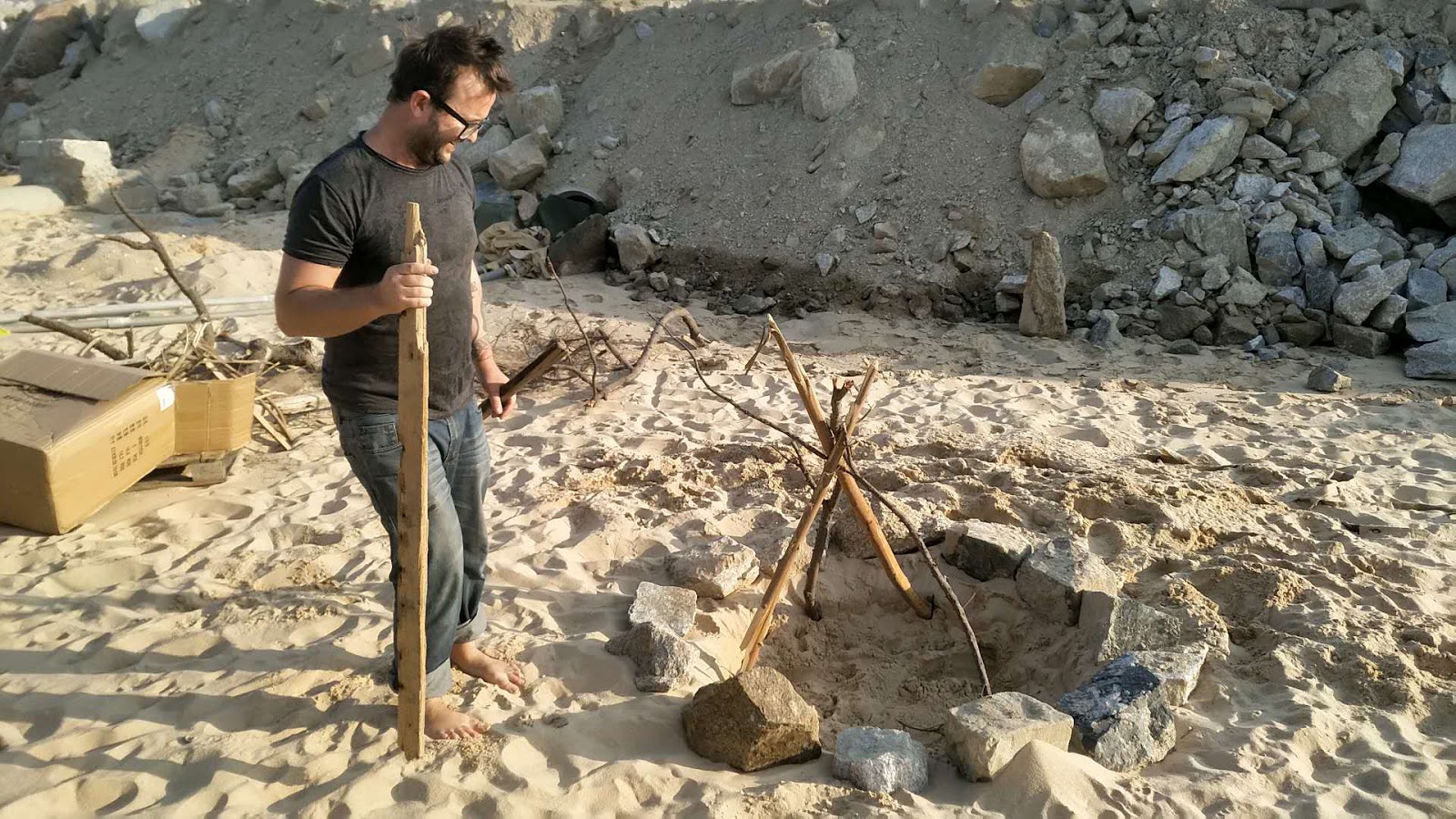
Footsteps from our home in Waigao Beach, my wife and I, were preparing fire wood for our very first MT fire. We wondered: How will parents respond to the idea of making a fire, singing songs and telling stories under a cold winter moon?


If you want to experience magic, you must place yourself outside the realm of the ordinary.

That night, magic happened! 12 beautiful families, 4 teachers and our, always supportive, management team laughed, played, feasted and most importantly: REMEMBERED. Many parents would share with us over the weeks to come, how the fire had helped them re-member childhood times. What better way to begin our celebrations of the upcoming new year than reaching far into the distant past?


Then, in 2018, our MT Family had grown. An ethos had begun that allowed for an increased confidence that our community was ready for these special fire celebrations together.


Experiential learning, such as the Winter Fires, are essential components to our holistic curriculum. Your children are not stuck in a classroom learning about the practices of our ancestors, we are participating, as a community, in the experience of these celebrations. The richness, however, will not take place tomorrow, rather it will be in memory of many future fires to be celebrated together during your child's kindergarten years at MT. This is how we make tradition. This is how we foster community. This is where we welcome DEEP LEARNING. These fires not only allow for us to feel a deep connection as a community but also, they remind us of our connection to the much greater cosmos. 4 times a year we gather around a fire. During the Summer and Winter solstices we gather ouside, under the starts, around a beach fire: celebrating the longest and shortest days of the year! During the equinoxes, in the spring and fall, we gather around the fire up on our rooftop garden. As children grow into a deeper understanding of the world they live in, these astronomical connections will awaken in them organically, because they will have grown up in the rich culture of a community of families and educators that recognize this depth and beauty.


So, bundle up, tomorrow will be cold. Bring some extra clothes. But, more importantly, welcome the magic of a new experience! We are working to create lifelong memories for you, your children but also our whole team! We remember very little from our kindergarten years, we are trying hard to change this for the new generation.

This is wonderful learning! See you tomorrow!


Carl EmmonsMT Kindergarten Teaching Director


Thursday, April 18, 2019

Holistic Parents Workshop #2 - The Bardic Parent

Renown firm believer in play, Joseph Chilton Pearce, was known for uttering travesties such as this, 


"What we are teaches the child far more than what we say,
so we must be what we want our children to become.” 

This type of rhetoric is dooms-talk for teachers and parents that have long since strayed from pathways of learning. I hear it all the time, 

"Oh, I'm not an artist." 
"I was never good at drawing." 
"I'm not very musical." 
"I sucked at math in school."
(ad infinitum)

If what Pearce claims is true than future generations are doomed if left in the hands of the defeated. 

Thankfully, there are small bands of menacing crooks stirring up trouble wherever apathy dares even to whisper.  Be on the lookout. We are THE BARDIC PARENTS. What we are teaches our children far more than what we write in our blogs. We know what we want. We our children to be bards as well.

And you? What do you want for your kid? A job? Ha. All Bards have jobs, but not all jobs have Bards. 

Along these lines, was the kick off for the second workshop of our Holistic Parents Certification Program. The topic of the night: THE BARDIC PARENT. 


God bless the Welsh.

See for yourself a window peak into the magic of Eisteddfod, a modern annual gathering of bardic families scattered all across the land of Wales:


Upon viewing, excitedly, our parents committed to slowly growing an Eisteddfod of our own, here in Shishi China of all places!! 

I must admit a certain thundering epiphany seemed to rumble through the room as our parents recognized how our bi-monthly MT Shows are headed towards a bardic North already. Time will tell. Dreams this big require committed community. Ember style. No flickering wicks in these winds of flat and stale uncultured modernity. 


What is a Bard?

The etymology of Bard. 

The roots of the word BARD stretch back to the age of the Proto-Indo-European (PIE). PIE is the mother of over 400 languages currently spoke around the world. It was a language spoken more than 6000 years ago at around the same time when the two main strands of eastern languages, the old Chinese and ancient tibetan-burman languages were also one, now referred to as the Proto-Sino-Tibetan language---around 4500bc, long before the era of Huangdi, the Yellow Emperor. 

Etymologically, the word Bard, derives from the PIE word for: gwredho which meant: THE ONE WHO MAKES PRAISES. 

What a beautiful idea to consider.

How to become parents/educators who make praise.   


I'm keen! And, as mentioned, I know a handful of good souls also up for this sort of blessed mayhem. In the words of Joseph Chilton Pearce,

"I want to be a bard--one who makes praises,
so that my kids may be ones who make praises."

Can I get a hoo-hoo? Hoo-hoo!

Life-giving or Life-preserving 

Before their decline in the 17thcentury, Bards were those whom one of our favorite poets, Robert Bly, would refer to as people who are LIFE-GIVING rather than simply LIFE-PRESERVING. 

Are you life-giving or life-preserving?

In essence, this question asks each of us to consider to what extent we maintain life/culture/the planet/etc….as it was passed on to us, or are we of the small remnant of bardic people who are committed to a life that regenerates life/culture/the planet even further. 


The essential skills, abilities and wisdom of a Bard. 

  1. Bards are storytellers. 
  2. Bards are musicians. 
  1. Bards are poets.
  1. Bards are Magicians. 
  1. Be the family Genealogist.
  1. Bards are Lovers of Lore.
  1. Bards are Arbitrators. 
  1. Bards understood a deep need for Community. 
No doubt a tall order but absolutely plausible if one has the right community within whom and whom within to grow. 

One of our favorite mystic authors is Thomas Merton. Here is a quote from his book, NO MAN IS AN ISLAND,

It is therefore of supreme importance that we consent to live not for ourselves but for others. When we do this we will be able first of all to face and accept our own limitations. As long as we secretly adore ourselves, our own deficiencies will remain to torture us with an apparent defilement. But if we live for others, we will gradually discover that no one expects us to be 'as gods'. We will see that we are human, like everyone else, that we all have weaknesses and deficiencies, and that these limitations of ours play a most important part in all our lives. It is because of them that we need others and others need us. We are not all weak in the same spots, and so we supplement and complete one another, each one making up in himself for the lack in another.”

Do you want Bardic kids? Find a community that wants it as bad or worse than you do. 

Culture can not be experienced, preserved or celebrated without community. Much less can it be regenerated. Every bard knew this. As you consider the life of the bard, know that your social circles will change. Like the old adage goes: Iron sharpens iron. So it is with becoming a bardic parent: BARDS FOSTER BARDS. Together we must bring our gifts to the offering table. 

Be off now. Like a flying arrow. 


Additional Links and Resources:

On Eisteddfod: https://eisteddfod.wales
PIE Language Tree:
Parable of Talents:
Essential Chinese poetry:


Tuesday, April 16, 2019

Holistic Parents Workshop #1: STORYTELLING (lecture notes)


WHAT IS STORYTELLING?

Storytelling is not the same as story reading. This ancient art form involves telling a story from memory without the aid of a script. Some storytellers use a verbatim approach while others are more flexible in their tellings. 


a) Why should we tell stories?

1. To help develop critical thinking skills  
2. Stories help build a pre-literacy foundation 
3. Stories boost a child's imagination and cultural literacy 
4. Storytelling fosters emotional literacy 

1. To help develop critical thinking skills 
Critical thinking happens when children draw on their existing knowledge and experience, as well as on their problem-solving skills, to do things like:
  • Explain WHY 
  • Evaluate ideas 
  • Form opinions 
  • Empathy 
  • Predict 
  • Creative Solutions 
There are many wonderful ways to foster critical thinking in children. One easy one is just allowing them to tinker around with new objects and come up with their own uses for them. The key is to give space for them to come to their own conclusions.

So, hold back from telling! Allow a space and time for discovery.

Stories are a great way to foster critical thinking. How so?

In order to truly understand the meaning of a story, children must do more than recognize the words. They must learn to “read between the lines” by figuring things out that are not actually stated in the story.  To do this, they must use critical thinking skills like problem-solving, predicting and explaining. Encouraging this kind of thinking early in a child’s life prepares her for understanding the books she’ll read on her own later on.

Language and critical thinking grow together and nurture each other’s development. As children engage in critical thinking, their language skills expand. They’re encouraged to develop and use more complex language with words like “because”, phrases with “if” and “then” and different verb tenses. Conversely, as children’s language development progresses, their ability to think critically grows as well.

2. Stories help build a pre-literacy foundation.
The journey from oracy to literacy is one of the most significant challenges your children will undergo over the next 15 years. Storytelling, if done adequately, requires a sophistication that goes beyond the level of conversation. Children that grow up around sophisticated language form effective building blocks required to become literate adults.

All written language is far more complex than spoken language. Consider the following statistics for the English language:

“…a list of 10,000 words essentially exhausts the vocabulary anyone – even a highly educated adult – uses in speaking. For reading and writing, on the other hand, educated English speakers might know as many as 100,000 words.”

Storytelling provides children with the rich foundation of vocabulary required for a confident leap into literacy. 

By building a strong pre-literacy foundation, storytelling prepares children for threat of Aliteracy: One of the greatest problems of modern education. Children around the world are successfully learning how to read while then choosing NOT to read out of disinterest. Though there are many reasons for aliteracy one root cause is an impoverished sense of story. Children with an early exposure to storytelling, recognize the art form of story while fostering skills from the experience. Storytelling foments vigorous listening skills and focus. Sequencing, prediction and memorization skills are also enhanced. 

These skills are foundational for children growing up into an enjoyable experience of reading.

3. Stories boost a child's imagination and cultural literacy

Sir Joseph Chilton Pearce in his influential essay on "Imagination and Play" says the following,

"Let's look at storytelling. The child responds to storytelling very early, even before they can talk. The word comes in as a vibration: sensory input. And that challenges the whole brain, not just to create an image in keeping with each word, but to create moving imagery, fluid imagery that follows the flow of the words. It sets up an inner-world scenario, a whole inner-world scene in which the scene is constantly shifting according to the shifting of the words themselves. This has been found to be a major challenge of the brain. The job is so enormous that the child goes into total entrainment. That is, all of the energy moves into this visual process of the inner world. The child goes catatonic: body movement ceases, the jaw drops, eyes get great big and wide. They are literally not in this world. Their eyes are wide open, but they are not looking at anything outwardly. They are looking at the marvelous world forming within them."

What Pearce is clearly stating is that storytelling creates the possibility for our children to explore their inner world through imaginations.

Stories not only enable a lively internal world, their culturally relevance, has survived the changing times by being passed on through generations. Storytelling is a gateway of knowledge of different ways of living throughout the ages.

Stories do not just develop children’s literacy and imagination; they convey values, beliefs, attitudes and social norms which, in turn, shape children’s perceptions of reality.”

Storytelling helps children learn to understand each other's differences. Children can listen to stories about other people and learn to empathize with those who live in different environments.

4. Storytelling Fosters Emotional Literacy
What is emotional literacy?

Emotional literacy - refers to the ability to express one's emotionalstate and communicate one's feelings. A person with well-developedemotional literacy is therefore able to recognize and respond to the emotionalstates of others.

Some aspects of emotional literacy which storytelling contributes towards are the following:

Self Awareness
To tell a story is a conscious act of self expression through which a child can experience themselves. Telling stories, a child can develop non-verbal skills of gesture, posture and tone of voice. Learning to tell stories can help develop self confidence, self esteem and a deeper sense of their own being – their thoughts, feelings, body and spirit.

Managing Feelings
Storytelling is a way of talking about our feelings and thoughts without intruding on personal issues. Telling, listening to, and discussing stories helps children learn and build their emotional vocabulary, by asking questions like, “What is the heroine feeling?” “What makes her feel this?” “How do her feelings change during the story?”

Many storytellers who work with children comment how children with emotional and behavioral difficulties respond enthusiastically to storytelling.

Motivation
The use of storytelling in interactive, cooperative work can support children to paint pictures in their mind’s eye of what the future might be for them. There are many stories about heroes and heroines – often the youngest or least fortunate in the family – and how they face and overcome obstacles through wit, fortune, the kindness of strangers or the wisdom of the natural world.

Empathy
Telling stories and listening to others telling stories helps develop the capacity to recognise and understand another person’s feelings. Empathy is the counterpart of self awareness. Watching and listening to another person telling a story, a child can learn to relate to the other person’s way of expressing emotion and to their gesture, posture and tone of voice.

Social Skills
Storytelling helps foster social understanding and competence. Stories impart wisdom about how to live; for example, the well known story of The Emperor’s New Clothes is partly about how the fear of being thought stupid leads to stupid behavior. Telling and talking about stories helps children think about moral issues and develop a sense of values. Cooperative storytelling games can help develop such social skills as initiating and allowing eye contact, taking turns and understanding rules, increasing assertiveness and dealing with conflict.


b. WHAT STORIES SHOULD WE TELL?
A few basic rules of thumb:

  • Choose stories that are so old that you don't know who wrote them. 
  • The richer the language the better. (Consider the Chinese classics) 
  • Let the story and your child be the teachers. Don't worry about what they will learn. 
Difference between Fairytales, Folktales and Myths
Myths are commonly misunderstood to be untrue stories. A long time ago, myths meant mystery. They were the big stories that told the truths that were too big to else wise explain. As adults, we are not comfortable living in a world we don't understand. But our children are fully immersed in a world they do not understand. When children learn to carry myths within they are strong to cope with the mysterious and, often treacherous, world outside.

Myths shape our cosmologies. They are often of a spiritual nature. Myths usually deal with creation, Gods, mortality and afterlife. They often give explanation to natural phenomenon, such as the seasons and the movement of the stars. Myths hold the beliefs of a culture within the safe confines of a story.

Examples of Chinese Myths:
  • Pang-hu盘古
  • Jade Rabbit 玉兔
Folktales are just as they sound: tales of the folks; the common people. These are stories that people sat around and told each other for entertainment, but more importantly, for instruction. They carry the collective wisdom passed down for generations. They teach values and are often cautionary: don't talk to strangers; honesty in the best policy; honor your elders.

Examples of Chinese folktales and Classics
  • In Pursuit of the Sun 夸父追日 
  • Yu Gong moves the mountain 愚公移山 
  • King Yu combating the flood 大禹治水 
  • David and Jonathan 管鲍之交 
  • High Mountains and Running Water 高山流水 
  • Chinese Folklore tales by Andrew Lang (available only in English) 

Fairytales are similar in theme, but tend to either be grander hero journeys (think princesses and kings) or have some magical element. The supernatural element would come from a fairy, witch or other magical being, but not a deity.

Examples are:
  • The Chinese Fairy Book by Zheng Yuanjie 中国童话大王郑渊洁 
  • The Chinese Fairy Book by Dr. Wilheim (available only in English) 
  • The Chinese Wonder Book by Norman Pittman (available only in English) 

c. HOW TO TELL A STORY? 
  • Become your child's favorite storyteller. (You already are!) 
  • Don't be afraid to take risks. 
  • Use voices. 
  • Use words you normally wouldn't use even among your peers. 
Foster Ritual and Ceremony 

Think of time, place and repeatable actions. 

R&C is a way of comforting our child into a participation with the larger universe. The world is big to us, now just imagine your children. By creating ritual and ceremony with our kids, we are welcoming them into a collective participation in that which is bigger than us.

R&C, no matter how simple you make it with your kids, is a bonding act between you, your child and the stories.

R&C, instills in our children an experience and sense of reverence. These stories, come from a long, long time ago. They have stood the test of time. Help your child manifest awe and gratitude towards those who have helped pass along the stories. Let them know of the cycle of life they are in, in which one day, they will be the storytellers responsible to keep the stories alive

Welcome others into Storytelling.
The more the merrier! Hopefully your children can have many storytellers in their life. Be especially encouraging to their grandparents and welcome them into the honorable place they have as the primary storytellers in the family.